
James Clear's Reading List: Books That Build Better Habits
James Clear, author of Atomic Habits, is a voracious reader who shares book recommendations focused on behavior change, decision-making, and continuous improvement.
 10 min read
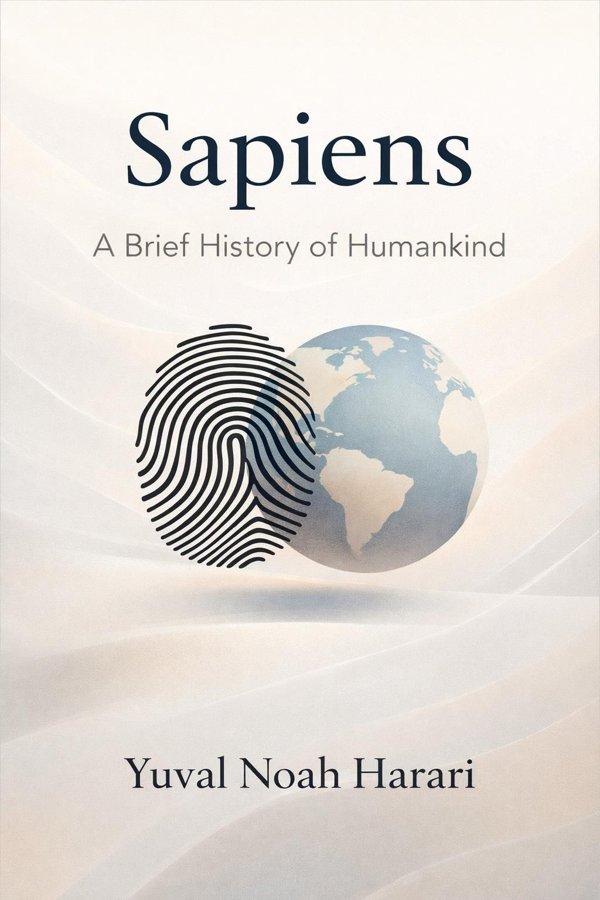
Sapiens
by Yuval Noah Harari
Sapiens: A Brief History of Humankind is a historical essay that explores the evolution of the human species from the earliest Homo sapiens to the modern era. Yuval Noah Harari examines how biology, anthropology, and economics have shaped human societies, highlighting three major revolutions: the cognitive, the agricultural, and the scientific. The book offers a panoramic view of how ideas, myths, and social structures have enabled humans to dominate the planet.
Key Takeaways
- 1The Cognitive Revolution: The birth of imagination — About seventy thousand years ago, something extraordinary happened. Our ancestors, who had lived much like other animals…
- 2The Agricultural Revolution: The trap of progress — Around ten thousand years ago, humans began to cultivate crops and domesticate animals, converting from nomadic foragers…
 10 min read
Siddhartha
by Hermann Hesse
Siddhartha is a 1922 novel by Hermann Hesse that follows the spiritual journey of a young man named Siddhartha during the time of the Buddha. Seeking enlightenment, Siddhartha explores asceticism, sensuality, and self-discovery, ultimately realizing the unity of all existence. The book is celebrated for its profound philosophical insights and its synthesis of Eastern and Western thought.
Key Takeaways
- 1The Dissatisfied Brahmin — I first met Siddhartha as a radiant young man, a Brahmin’s son whose life seemed already blessed. He was admired for his…
- 2Life with the Samanas and the Encounter with the Buddha — Life among the Samanas taught Siddhartha self-denial, but also the limits of renunciation. Under the harsh sun, he learn…
- 3The Worldly Years: Kamala and Kamaswami
 10 min read
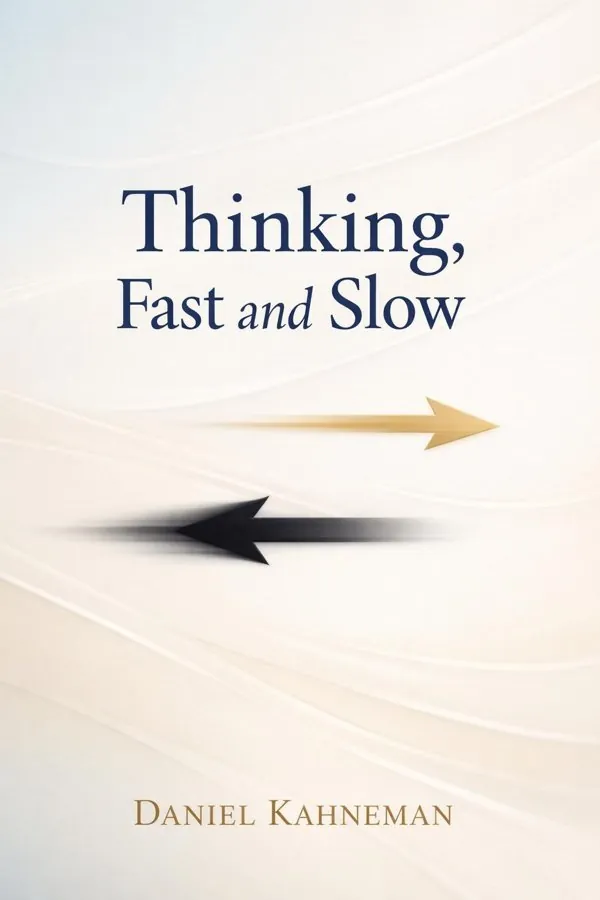
Thinking Fast and Slow
by Daniel Kahneman
In this landmark book, Nobel laureate Daniel Kahneman presents decades of research on how humans think, revealing the dual systems that drive our judgments and decisions: the fast, intuitive, and emotional System 1, and the slow, deliberate, and logical System 2. Through engaging examples and experiments, Kahneman explores cognitive biases, heuristics, and the limits of rationality, offering profound insights into how we make choices in everyday life and professional contexts.
Key Takeaways
- 1The Two Systems of Thought — Our minds work through two interacting systems. System 1 is automatic, fast, and emotional; System 2 is controlled, slow…
- 2Heuristics and Biases: The Architecture of Errors — Our cognitive machinery developed to manage complexity through shortcuts—mental rules of thumb called heuristics. Heuris…
- 3Overconfidence and Illusion of Understanding
 10 min read
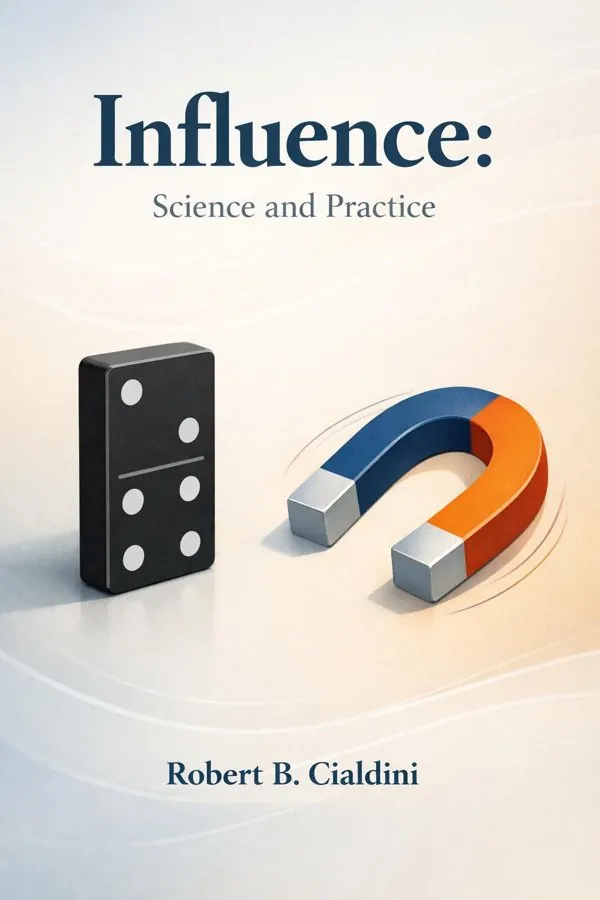
Influence
by Robert Cialdini
This book explores the psychology of persuasion and the mechanisms that drive people to say 'yes'. Robert B. Cialdini, a renowned social psychologist, presents six universal principles of influence—reciprocity, commitment and consistency, social proof, authority, liking, and scarcity—supported by decades of empirical research. It is widely used in marketing, negotiation, and behavioral science to understand and ethically apply persuasive techniques.
Key Takeaways
- 1Weapons of Influence — Before examining each principle individually, we must understand the nature of automatic influence. Humans, like other a…
- 2Reciprocity — One of the oldest and most pervasive rules of human conduct is the rule of reciprocity. Across cultures and throughout h…
- 3Commitment and Consistency
 10 min read
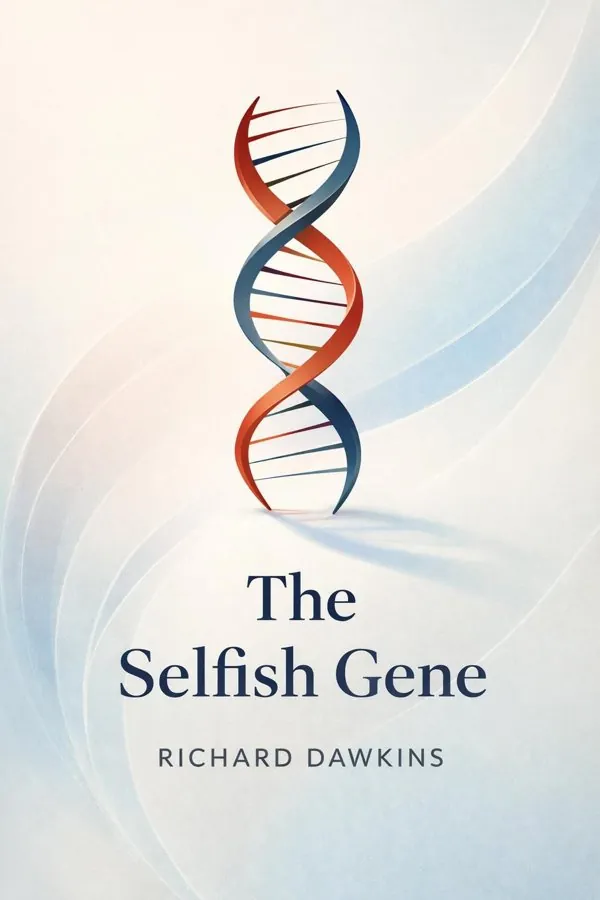
The Selfish Gene
by Richard Dawkins
The Selfish Gene is a groundbreaking work of evolutionary biology that popularized the gene-centered view of evolution. Richard Dawkins argues that natural selection acts primarily at the level of genes, which behave as if they are 'selfish' in their drive to replicate. The book introduces key concepts such as the replicator, the meme, and the idea that altruistic behavior can arise from the self-interest of genes. It reshaped public understanding of evolution and influenced fields from biology to psychology and philosophy.
Key Takeaways
- 1The Gene-Centered View of Evolution — At the core of my argument lies a simple yet revolutionary shift: natural selection acts not primarily on organisms or g…
- 2Replicators and Vehicles — To understand evolution properly, it is essential to separate replicators—the informational molecules that persist—from …
- 3Altruism and Inclusive Fitness
 10 min read
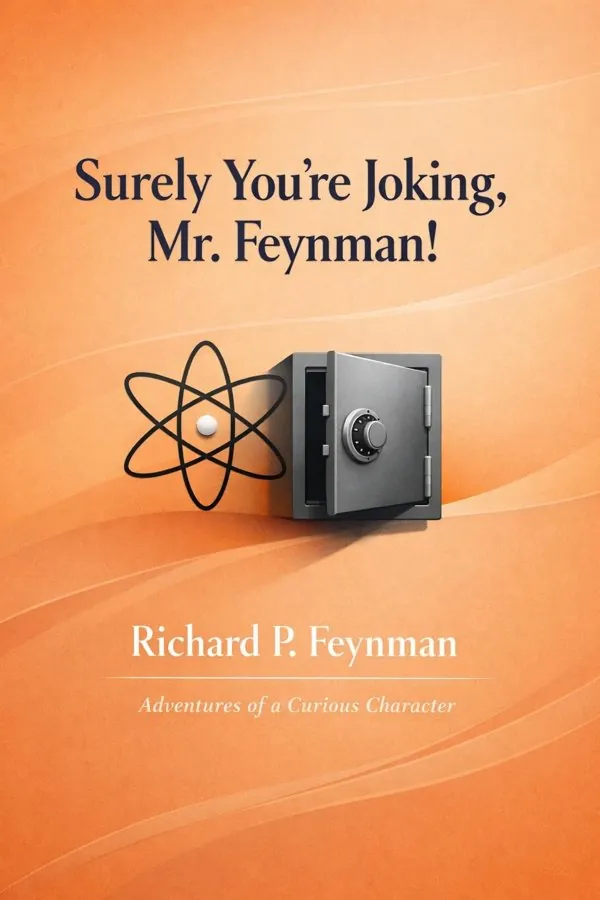
Surely You're Joking, Mr. Feynman!
by Richard P. Feynman
A collection of autobiographical stories by Nobel Prize–winning physicist Richard P. Feynman, recounting his adventures inside and outside the world of science. The book captures his curiosity, humor, and unconventional approach to life, from his work on the Manhattan Project to his fascination with safecracking and art.
Key Takeaways
- 1The Joy of Learning: Early Curiosity and My Father’s Influence — It all began in Far Rockaway, New York, long before anyone knew the name Feynman. My father, Melville, didn’t have a sci…
- 2Becoming a Physicist: Finding My Way at MIT and Princeton — At MIT, I finally found a place where curiosity wasn’t strange behavior. I majored in physics not because I planned to, …
- 3Los Alamos: Science, Secrecy, and Safecracking
 10 min read
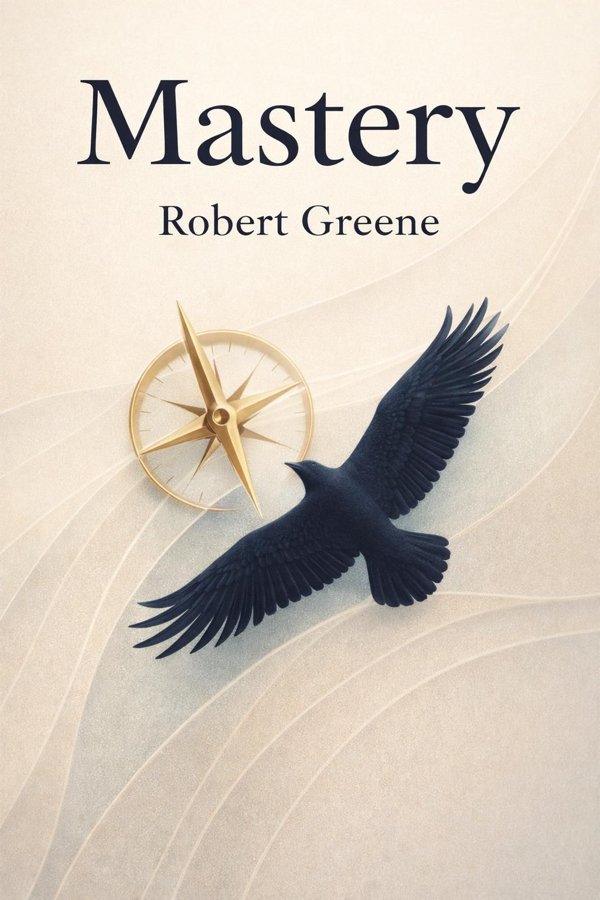
Mastery
by Robert Greene
In Mastery, Robert Greene explores the process of achieving excellence by studying the lives of historical and contemporary masters. He outlines the stages of apprenticeship, creative independence, and mastery, showing how individuals can unlock their potential through dedication, learning, and persistence. Drawing on examples from figures such as Leonardo da Vinci, Charles Darwin, and modern innovators, Greene provides a roadmap for personal and professional growth.
Key Takeaways
- 1Discovering Your Life’s Task — Every human being is born with a deep inclination—a calling that aligns with their natural curiosity and temperament. Ma…
- 2The Apprenticeship Phase — The apprenticeship is the crucible of mastery—a period of humility, patience, and unrelenting observation. In this phase…
- 3Absorbing the Master’s Power
 10 min read
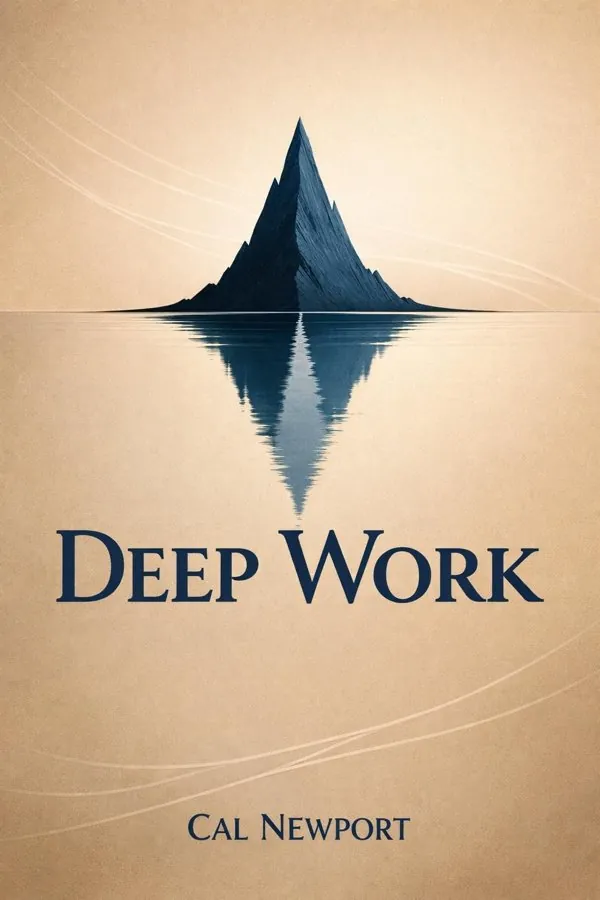
Deep Work
by Cal Newport
In a world ruled by notifications, open-plan offices, endless email threads, and the pressure to always appear available, the ability to focus has become both rare and incredibly valuable. Deep Work by Cal Newport argues that the people who thrive in today’s economy are not necessarily the busiest or the most connected, but the ones who can concentrate intensely on meaningful tasks without distraction. This book is about cultivating that increasingly uncommon skill and using it to produce better results in less time. Newport makes the case that deep, undistracted concentration is a superpower for the knowledge age. He contrasts it with “shallow work,” the reactive, fragmented activity that fills many calendars but creates little lasting value. Drawing from neuroscience, business, academic research, and real-world examples, he shows why focus matters, why it is so hard to maintain, and how anyone can train it. Cal Newport is particularly credible on this subject because he has built a career as a computer science professor, writer, and researcher while famously avoiding much of the digital noise that consumes modern workers. Deep Work is not just a theory of productivity. It is a practical philosophy for doing your best thinking in a distracted age.
Key Takeaways
- 1Focus Is the New Competitive Advantage — The modern economy rewards people who can learn hard things quickly and produce at an elite level, yet both abilities de…
- 2Shallow Work Feels Productive but Isn’t — One of the most dangerous illusions in modern work is that being active is the same as being effective. Newport warns th…
- 3Attention Must Be Trained Like a Muscle — Deep focus is not something you either naturally have or permanently lack. Newport argues that concentration is trainabl…
 10 min read
Man's Search for Meaning
by Viktor Frankl
What keeps a person going when everything familiar has been taken away—comfort, identity, loved ones, freedom, and even the expectation of tomorrow? That is the unbearable and essential question at the heart of *Man's Search for Meaning*. Viktor E. Frankl’s landmark book is far more than a Holocaust memoir. It is a profound study of human endurance, an examination of suffering, and a practical philosophy for anyone trying to live with purpose in hard times. Drawing on his experiences in Nazi concentration camps, Frankl explores how people respond when life is reduced to its barest terms and why some still manage to preserve dignity, hope, and inner freedom. What makes this book endure is that Frankl does not offer empty inspiration. He writes as an Austrian neurologist, psychiatrist, and Holocaust survivor who later developed logotherapy, a school of psychotherapy centered on meaning as the primary human motivation. His insight is simple but life-changing: even when we cannot change our circumstances, we can still choose our response. That idea has made this book one of the most influential works in psychology and self-help, especially for readers facing grief, burnout, uncertainty, or the quiet fear that life has lost direction.
Key Takeaways
- 1The Shock of Arrival and the Dehumanization of Camp Life — When Frankl first arrived at Auschwitz, the destruction of the self began immediately. The process was systematic: priso…
- 2Emotional Detachment and the Apathy that Defines Survival — After the first shock came a second psychological stage: apathy. Frankl shows that this numbness was not indifference in…
- 3Moral Choice and Inner Freedom in the Midst of Suffering — One of the book’s most powerful claims is that even under extreme oppression, a human being retains a final freedom: the…
Want the full summary?
Get instant access to this book summary and 500K+ more with Fizz Moment.
Get Free SummaryAvailable on App Store • Free to download
About This List
James Clear, author of Atomic Habits, is a voracious reader who shares book recommendations focused on behavior change, decision-making, and continuous improvement.
This list features 9 carefully selected books. With FizzRead, you can read AI-powered summaries of each book in just 15 minutes. Get the key takeaways and start applying the insights immediately.
Ready to start reading?
Get instant access to all 9 book summaries and 500K+ more with FizzRead.